You Won’t Believe This City’s Wild Landscape – Rotterdam’s Secret Spots Uncovered
Rotterdam used to be just a port city with a modern skyline, but now it’s a visual playground. I went looking for the unexpected and found terrain so unique—floating homes, surreal architecture, and green rooftops—that it felt like another planet. Every corner is built for the perfect shot. If you're chasing destinations that surprise and inspire, this Dutch gem should be next on your list. Trust me, it’s not what you think.
From Rubble to Radical: How Rotterdam Rebuilt Itself into a Visual Marvel
Rotterdam’s story begins not with sleek towers or floating homes, but with ashes. In May 1940, during World War II, the city center was reduced to rubble in a single bombing raid. Over 80 percent of the historic core vanished in hours. Unlike other European cities that chose to rebuild in traditional styles, Rotterdam made a bold decision: to rise not as it was, but as something entirely new. This tragedy became the foundation for a radical experiment in urban design, where innovation, functionality, and daring aesthetics would shape the city’s identity for generations.
The port had always been Rotterdam’s lifeblood, and its recovery focused on industry and logistics. But as the economy evolved, so did the city’s ambitions. By the late 20th century, Rotterdam began attracting visionary architects from around the world, offering them freedom to test bold ideas. The result? A skyline that defies convention. Where other cities preserve the past, Rotterdam embraces the future—its streets lined with structures that look like they belong in science fiction. This architectural freedom has made the city a magnet for photographers, urban planners, and curious travelers seeking a fresh perspective on city life.
What makes Rotterdam’s transformation so compelling is not just its modern look, but the intention behind it. The city didn’t rebuild for nostalgia—it rebuilt for progress. Every bridge, building, and public space was designed with purpose: to be efficient, sustainable, and visually striking. This mindset has created a landscape where beauty and function coexist. For the traveler, this means every turn reveals something unexpected—a tower that seems to defy gravity, a park built on a former parking lot, or a market hall that doubles as a giant canvas. The city’s past destruction has become its creative fuel, offering a powerful reminder that from loss can come reinvention.
The Cube Houses: Walking Among the Angles
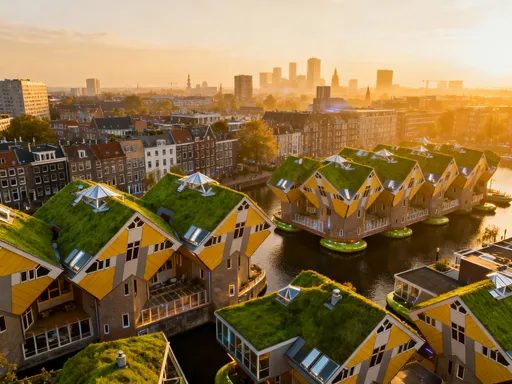
Among Rotterdam’s most iconic landmarks are the Kubuswoningen, or Cube Houses, a cluster of yellow, tilted homes that look like they’ve been stacked at random. Designed by architect Piet Blom in the 1980s, these structures are more than just a visual curiosity—they represent a radical reimagining of urban living. Each cube is tilted at a 45-degree angle and perched atop a hexagonal pillar, creating the illusion of a forest of trees. Blom’s vision was to build a “city within a city,” where residents live in “trees” while the ground level serves as the “forest floor” for shops and public space.
Stepping inside one of the cubes is an experience in spatial creativity. Despite their compact footprint, the interiors are cleverly designed to maximize space. A typical cube house has three levels: the lower section for living and dining, the middle for sleeping, and the top for a small study or reading nook. Large windows on the southern face flood the rooms with natural light, while the angled walls create a sense of dynamic movement. One can’t help but feel both grounded and suspended—anchored to the earth yet leaning into the sky. A few of the homes are open to the public as short-term rentals or mini-museums, offering visitors a rare chance to experience life inside this architectural marvel.
For photographers, the Cube Houses offer endless possibilities. The best time to capture them is early in the morning, just after sunrise, when the golden light warms the yellow façades and long shadows emphasize their angular forms. Shooting from the ground level, looking up, enhances the feeling of imbalance and wonder. For a wider perspective, the nearby pedestrian bridge over the Blaak station provides a panoramic view of the entire cluster. Evening visits reveal a different mood, as the windows glow from within, turning the cubes into lanterns. Whether you’re drawn to their design, their story, or their photogenic quality, the Cube Houses are a testament to how architecture can challenge our expectations of home.
Markthal: Where Art, Food, and Architecture Collide
If Rotterdam has a beating heart, it’s the Markthal—a horseshoe-shaped building that houses over 100 food stalls, apartments, and the world’s largest indoor artwork. Opened in 2014, this architectural gem spans 120 meters long and 70 meters high, forming a grand arch that shelters a bustling marketplace beneath. The interior ceiling is covered with a 11,000-square-meter mural called “Horn of Plenty” by artists Arno Coenen and Erwin de Bloois. The vibrant image features enlarged fruits, vegetables, flowers, and insects, creating a surreal, dreamlike canopy that transforms the space into a living gallery.
Walking through the Markthal is a sensory journey. The scent of fresh bread, Dutch cheese, and international spices fills the air. Locals and tourists alike browse stalls offering everything from organic produce to handmade chocolates. There are also restaurants serving Indonesian, Middle Eastern, and Dutch cuisine—a nod to Rotterdam’s diverse population. The upper levels of the building contain modern apartments, their balconies overlooking the market like private theater boxes. This mix of residential and commercial life reflects Rotterdam’s approach to urban planning: dense, efficient, and human-centered.
Photographically, the Markthal is a playground of light, color, and geometry. The curved glass façade allows natural light to flood the interior, shifting throughout the day. The best time to photograph the mural is mid-morning, when the sun hits the glass at an angle, illuminating the artwork without harsh glare. Using a wide-angle lens captures the full sweep of the arch, while a telephoto lens can isolate details in the mural, such as a single dew-covered strawberry or a magnified bee. For a unique perspective, try shooting from the upper floors, looking down through the glass railings. The reflection of the artwork on the polished floor creates a symmetrical, almost infinite effect. Whether you’re there to eat or to shoot, the Markthal is a celebration of abundance, creativity, and community.
The Waterfront Revolution: Floating Homes and Maritime Innovation
Rotterdam’s relationship with water is not just historical—it’s evolutionary. As a port city built on rivers and canals, it has long adapted to life on the water. But rising sea levels and climate change have pushed the city to innovate in new ways. One of the most striking examples is its floating housing projects, such as the Koppelpoort neighborhood. Here, dozens of colorful homes rest directly on the Maas River, bobbing gently with the tides. These aren’t temporary barges or houseboats—they’re permanent, fully equipped residences with modern amenities, built on floating concrete pontoons.
The design of these homes reflects both practicality and beauty. They are energy-efficient, often equipped with solar panels and rainwater collection systems. Because they float, they rise and fall with the water level, making them resilient to flooding—a critical feature in a country where much of the land lies below sea level. The architecture varies from minimalist cubes to sloped-roof cottages, painted in cheerful blues, reds, and yellows. From a distance, they look like a floating village, harmonizing with the river rather than fighting against it.
For visitors, the floating homes offer a glimpse into the future of sustainable urban living. While most are private residences, guided boat tours provide close-up views and insights into their construction. The best vantage point is from the Wilhelmina Pier, where you can see the entire cluster against the backdrop of the city skyline. Sunset is an ideal time to photograph them, as the warm light reflects off the water, creating a shimmering effect. These homes are more than just a novelty—they represent a practical response to climate challenges, proving that innovation can be both functional and beautiful. In a world grappling with rising waters, Rotterdam’s floating neighborhoods may offer a blueprint for coastal cities everywhere.
Roofs That Breathe: The Rise of Green Architecture
Rotterdam doesn’t just build upward—it builds greener. The city has become a European leader in green roof technology, with over 400,000 square meters of rooftop gardens, farms, and green spaces. This initiative began as a response to urban heat, stormwater runoff, and air pollution, but it has evolved into a movement that redefines how cities use space. One of the most remarkable examples is Dakpark, a 600-meter-long elevated park built on top of a former parking garage. What was once a concrete eyesore is now a lush green corridor where people walk, jog, and picnic above the city streets.
Green roofs in Rotterdam serve multiple purposes. They absorb rainwater, reducing the risk of flooding. They insulate buildings, lowering energy costs. And they create habitats for birds, bees, and insects, supporting urban biodiversity. Some rooftops are even used for urban farming, growing vegetables, herbs, and flowers that supply local restaurants. The city offers incentives for building owners to install green roofs, and new developments are often required to include them. This policy-driven approach has made sustainability visible and accessible to everyone.
For the mindful traveler, these rooftop spaces offer quiet retreats from the urban buzz. While not all are open to the public, some buildings allow visitors by appointment or during special events. The rooftop garden at the Rotterdam Central Library, for example, is a hidden oasis with seating areas and panoramic views. Photographers will appreciate the contrast between the soft greenery and the hard lines of the cityscape. Early morning visits bring misty light and fewer people, perfect for capturing serene, contemplative images. These elevated gardens are more than just environmental solutions—they are spaces of peace, beauty, and connection, reminding us that cities can be both modern and alive.
Street Art and Urban Texture: The Gritty Beauty of the City’s Edges
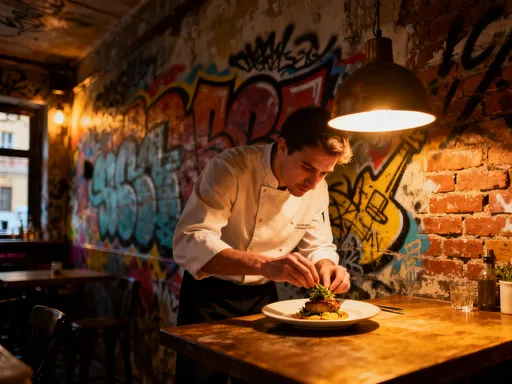
While Rotterdam’s skyline gleams with glass and steel, its soul can be found in the raw, unpolished corners where creativity runs wild. The city has long embraced street art as a form of expression, transforming blank walls into vibrant murals that tell stories of identity, resistance, and hope. Neighborhoods like Oude Westen and Katendrecht, once industrial zones on the city’s margins, have become open-air galleries where local and international artists leave their mark. These areas are not curated museums—they are living, evolving spaces where new works appear overnight and older pieces fade with time.
The street art in Rotterdam is as diverse as its people. Some murals are politically charged, others whimsical or abstract. One wall might feature a giant portrait of a local hero, while another displays a surreal collage of animals and machinery. The textures are equally compelling—peeling paint, rusted metal, and cracked concrete become part of the artwork, adding layers of history and character. This embrace of imperfection sets Rotterdam apart from cities that sanitize their streets. Here, grit is not hidden—it’s celebrated.
For photographers, these neighborhoods offer endless material. The interplay of color and decay creates dramatic contrasts. Side alleys, forgotten staircases, and industrial facades become backdrops for powerful images. The best way to explore is on foot, with no fixed route—wandering allows for serendipitous discoveries. Carry a prime lens for sharp details, and don’t shy away from shadows and textures. Some of the most compelling shots come from close-ups of cracked paint or a single flower growing through a wall. These moments capture the spirit of Rotterdam: resilient, creative, and unafraid to show its edges.
Getting Around Like a Local: Practical Tips for the Instagram-Savvy Traveler
To truly experience Rotterdam, you must move like a local—and that means getting on a bike. The city is flat, compact, and incredibly bike-friendly, with over 500 kilometers of dedicated cycling paths. Renting a bicycle is easy, with multiple rental shops and bike-sharing stations throughout the center. Cycling allows you to cover more ground than walking, while still moving slowly enough to notice details—a mural around a corner, a hidden garden, or the reflection of a tower in a canal. For those who prefer public transit, Rotterdam’s metro, trams, and buses are efficient, clean, and well-connected, with clear signage in English.
Timing is everything for the visual traveler. The golden hour—shortly after sunrise and before sunset—transforms the city. During these times, the light is soft and warm, enhancing the textures of brick, glass, and water. Early mornings are especially rewarding, as the streets are quiet and the light is pure. Popular spots like the Cube Houses and Markthal are less crowded, allowing for unobstructed shots. If you’re planning to photograph interiors, midday can be ideal when natural light floods through glass façades. For night photography, the city lights up beautifully, especially along the waterfront and on bridges like the Erasmus Bridge, which glows white against the dark sky.
While chasing the perfect image, it’s important to travel respectfully. Always ask permission before photographing people, especially in residential areas. Avoid blocking sidewalks or disrupting daily life for a shot. Remember that many of the places you visit are someone’s home or workplace. The goal is not just to capture beauty, but to honor it. By being mindful, you not only create better images but also contribute to a culture of respect and appreciation. Rotterdam rewards the patient, the curious, and the kind-hearted traveler with moments of quiet wonder.
Conclusion
Rotterdam isn’t just a city—it’s a living experiment in design, resilience, and beauty. Its special terrain, born from necessity and shaped by imagination, offers more than just eye-catching views. It invites you to see urban life differently. Whether you're there for the architecture, the vibe, or the next great photo, you’ll leave inspired. The future of cities is already here. Are you ready to explore it?